
Almost everyone who gets on a reformer for the first time asks the same thing: "It's my first time, so please make it as light as possible." At the gym, that makes sense. Lighter weight is easier. On the reformer, though, that rule is often reversed. Some exercises get much harder the moment you take off a spring.
Springs work against you and for you
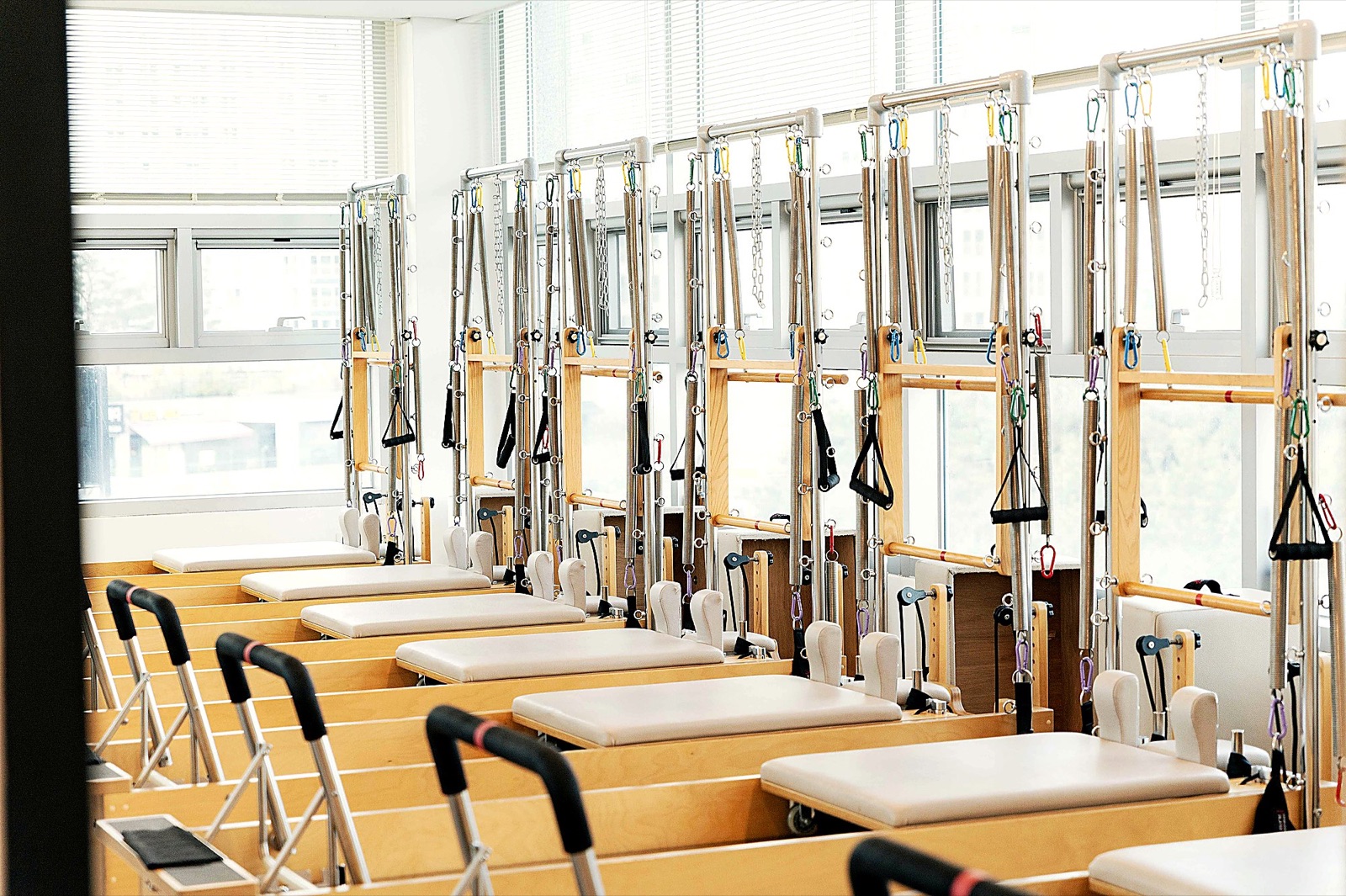
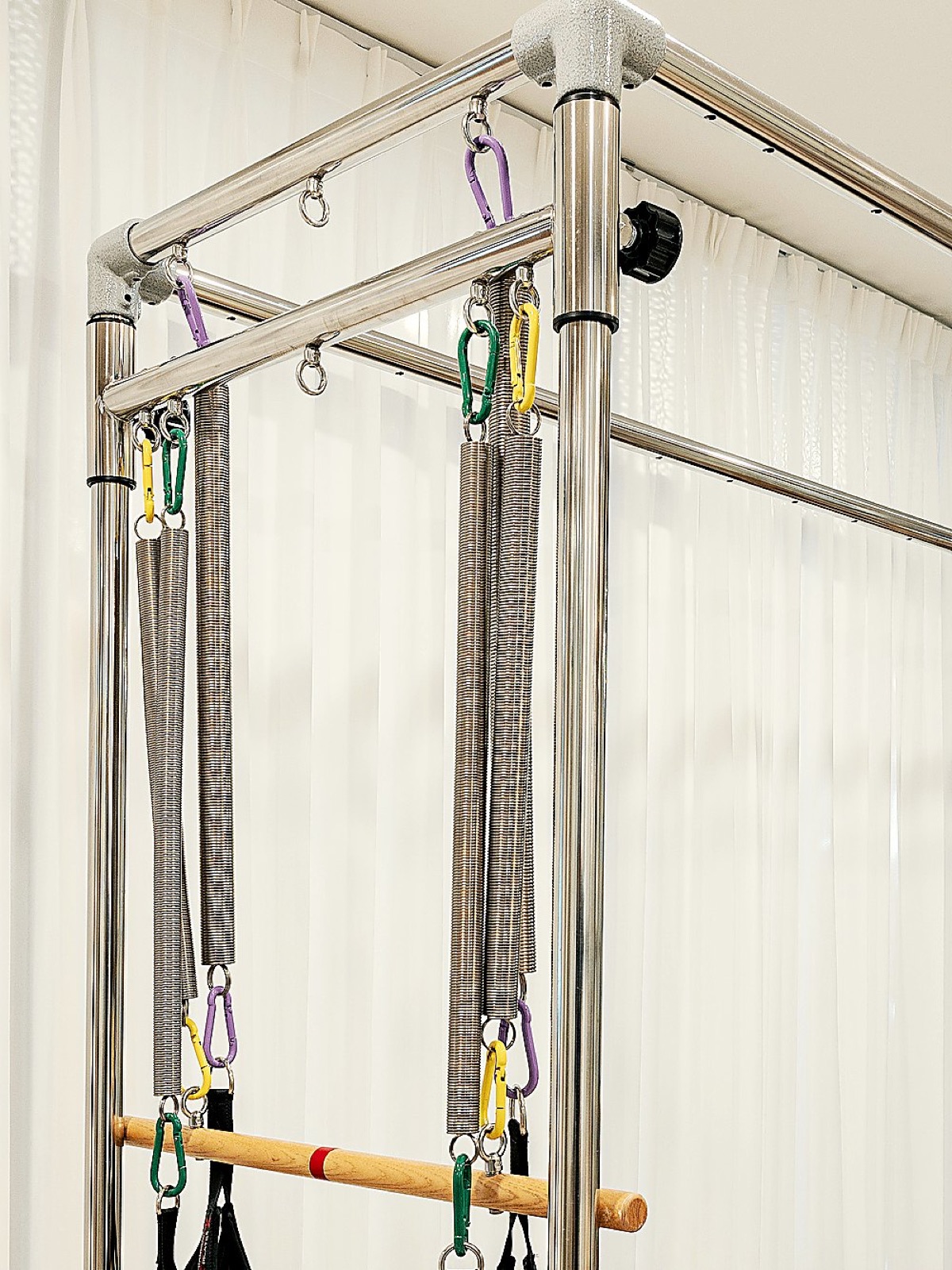
The weight stack on a gym machine works in one direction only. It resists when you lift it, and when you put it down, that's it. Reformer springs connect the moving carriage to the frame, so when the carriage slides out, they pull it back. When you push, they work against you. When you hold still, they help by keeping the carriage steady.
In pushing exercises like footwork, springs behave the way you'd expect. The heavier the spring, the harder your legs work. Things change in an exercise like long stretch, where you hold the carriage steady with your arms and keep your body in a straight line, or when you kneel and push the carriage out and pull it back. With a light spring, the carriage slides easily, and your abs and shoulders have to stop all that wobble. This is usually where people start to shake.
Intensity has two directions
The same footwork serves a different purpose when you change the spring. Heavy springs make it closer to leg strength training. Light springs make it a control exercise, where you have to slow the carriage as it comes back. When your feet are in the straps and you draw circles with your legs, lighter springs give your legs less support, so your abs have to work harder to keep your pelvis still.
So on the reformer, increasing intensity can mean two things. One is strength: pushing something heavier. The other is control: staying steady on something lighter. People who have been training for a long time often find the second one harder.
What happens when it's too heavy
On the other hand, if the spring is too heavy for your body, a different problem shows up. Your lower back and pelvis start taking on the load your legs can't handle. You finish the exercise, but the wrong places get tired. That's why the right spring is not the heaviest one you can manage, but the heaviest one you can use without losing your form. That point is different for everyone, and even for the same person it changes a little from day to day.
If it's your first time on the reformer, instead of saying "Please make it light," try this: "Please set it so I don't lose my form." That one sentence changes how you approach the equipment.
At Balance On Pilates Hanam
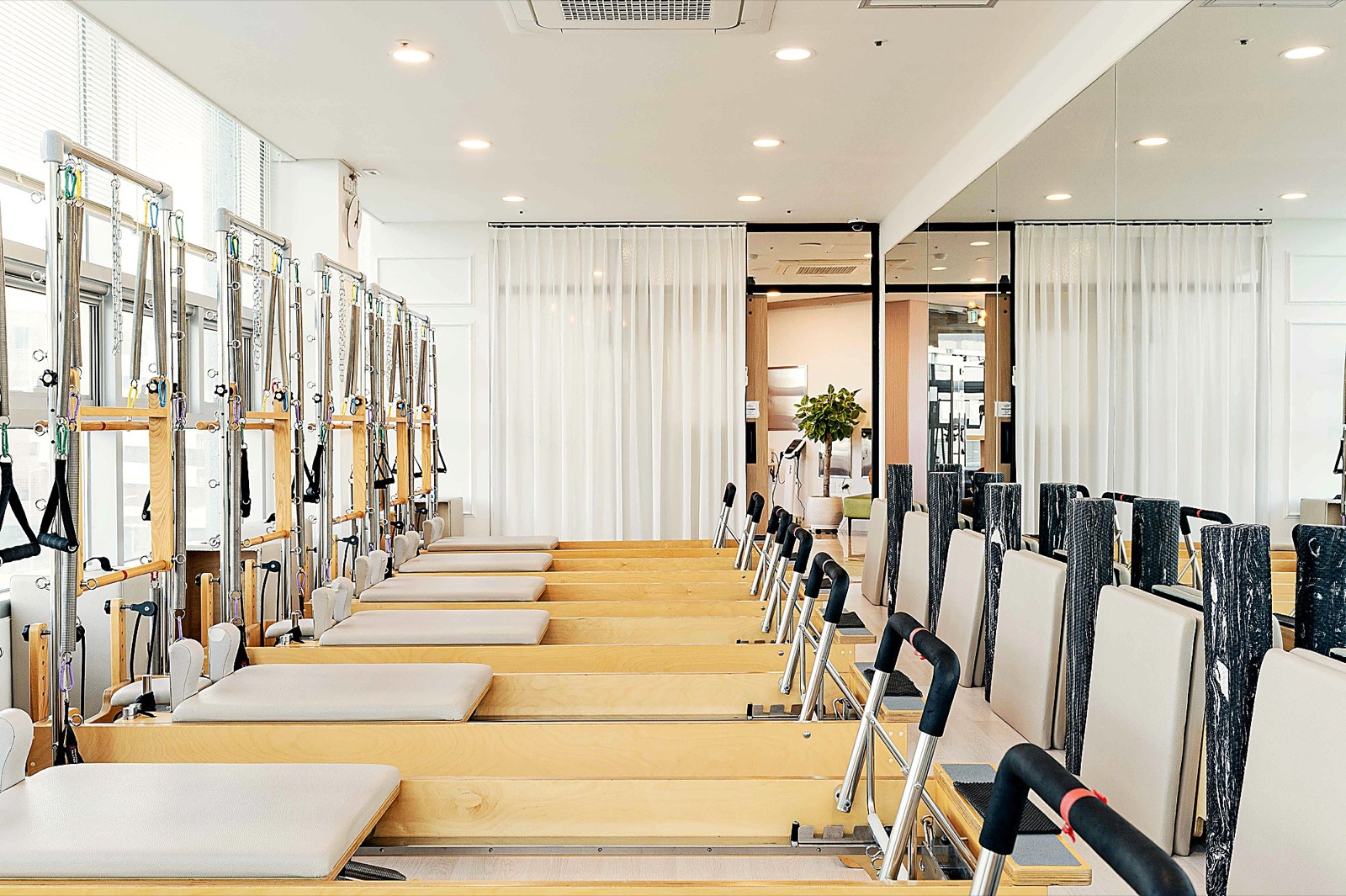
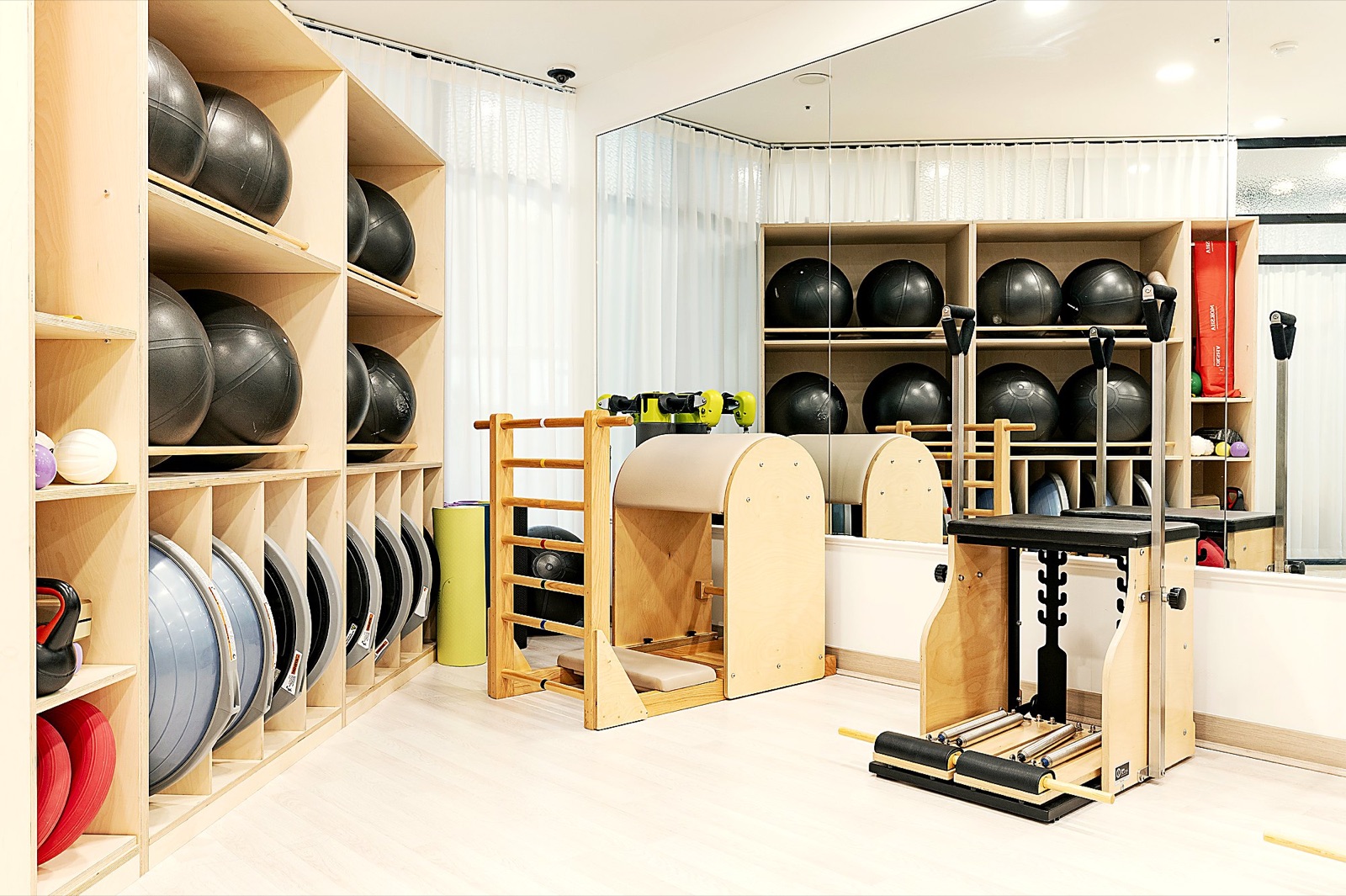
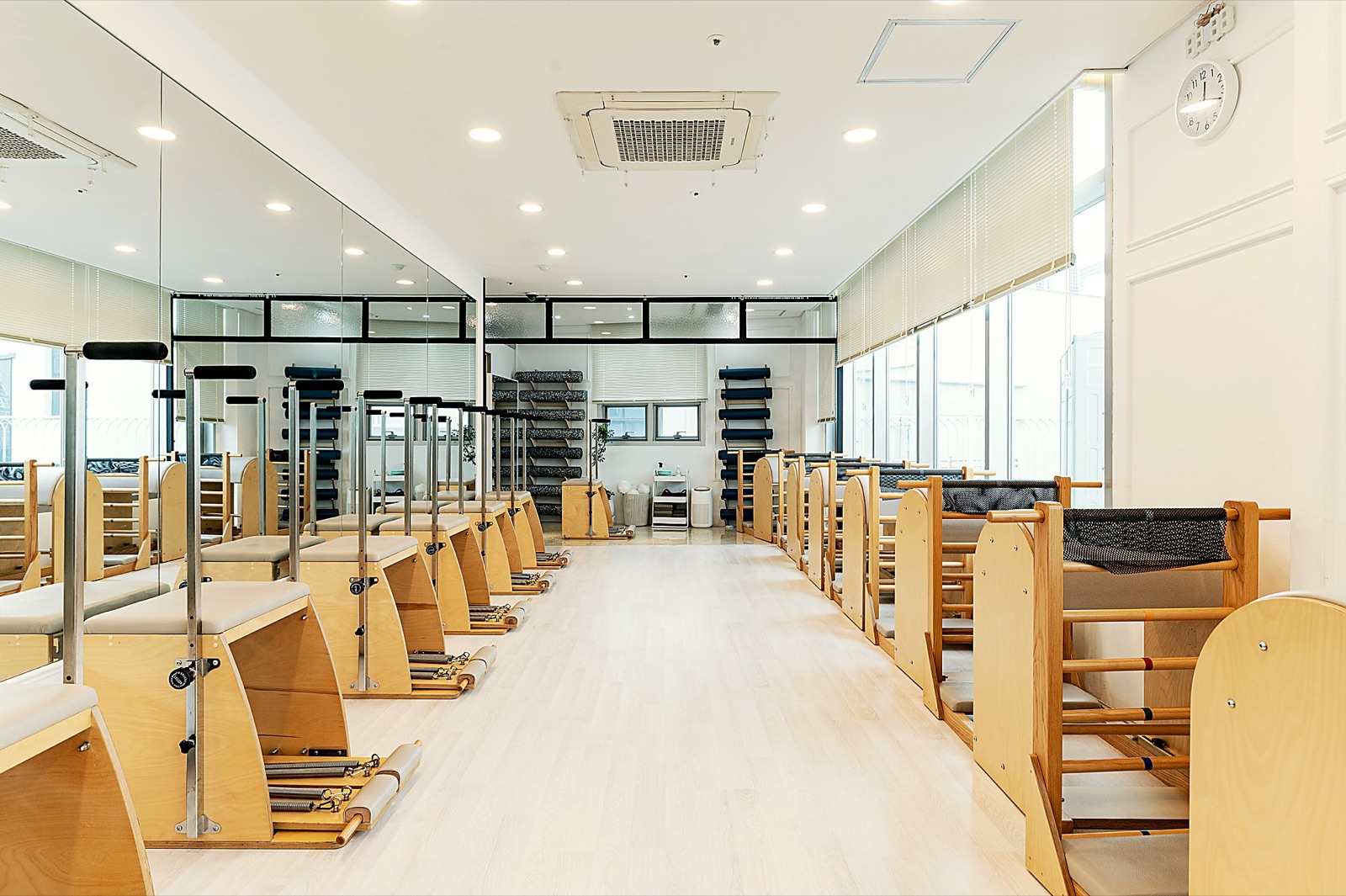
Private lessons at Balance On Pilates Hanam use Balanced Body reformers from the US, and the instructor adjusts the spring tension and footbar height for each exercise. Group classes are split into Beginner, Intermediate, and Power, so if you're new to the reformer, you'll start in a Beginner class and learn how to use the equipment. If the equipment feels unfamiliar, you can also start with private lessons to find the setting where you can hold your form, then move on to group classes.