
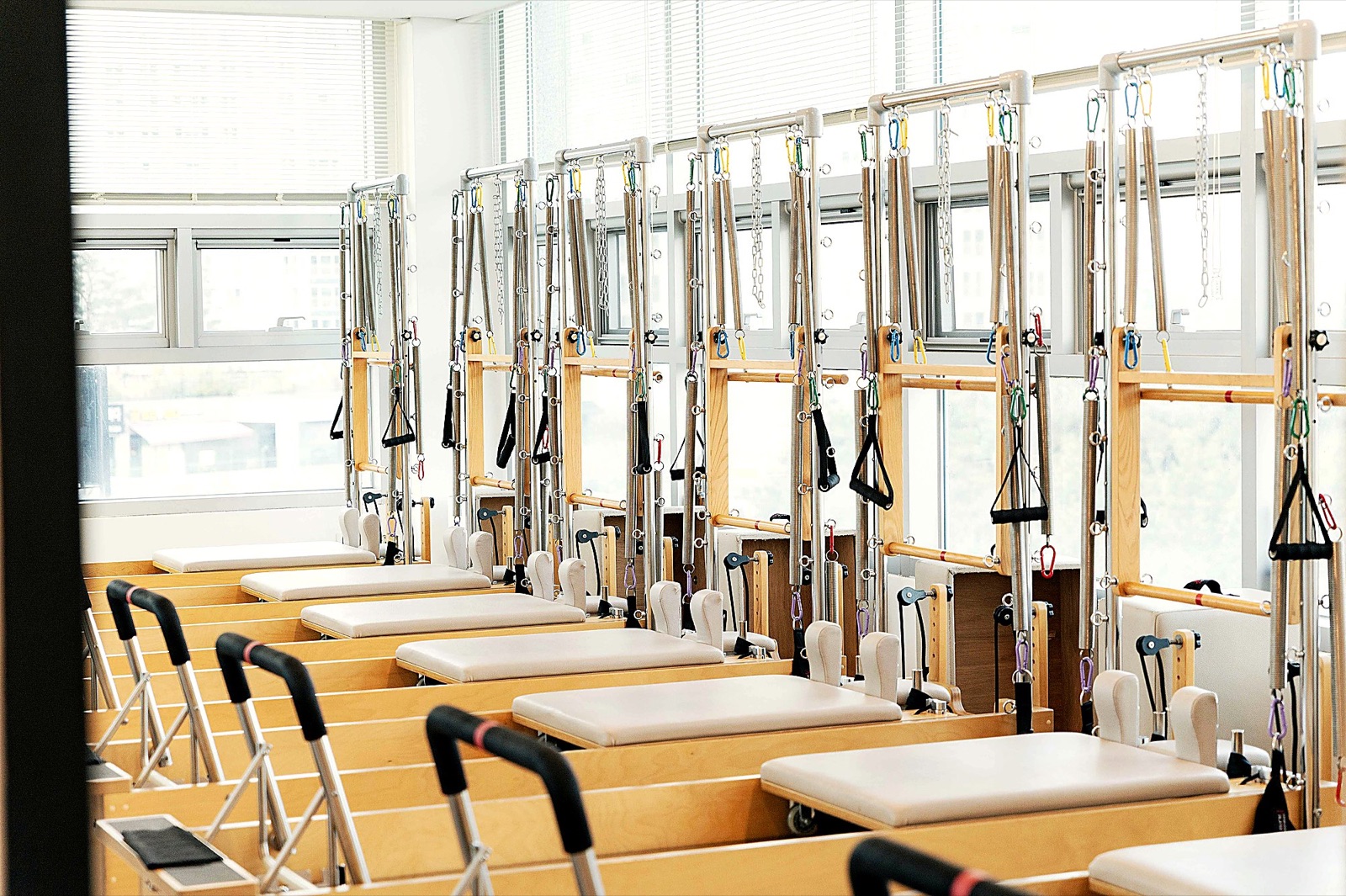
Footwork, where you lie on the reformer and push the foot bar away with your feet, is a leg exercise. But some people finish all thirty reps and get up with a stiff lower back before their thighs feel anything. Most people shrug it off: "I'm just not strong enough yet." That isn't wrong, but it isn't quite right either. You have enough strength. It's just going down the wrong path.
Your body isn't lazy. It's clever
Your body is built to finish whatever job it's given, one way or another. If your glutes and hamstrings aren't ready to push the foot bar, your body calls in the nearest help, your lower back muscles, to share the work. You can see it happen: your pelvis tips slightly forward and your lower back lifts off the mat. You still finish the movement, and from the outside nothing looks wrong.
This is called compensation. It's the same thing that happens in the Hundred when your neck holds up your head because your abs are tired, or when you pull on the straps and your shoulders creep up toward your ears instead of your back doing the work. To your body, this isn't failing. It's solving the problem. The trouble is that it keeps solving it the same way.
Why more reps make it worse
If you do ten more reps while compensating, your body practices that shortcut ten more times. Muscles get trained by how you use them. Once the habit of doing leg work with your lower back sets in, your legs stay weak and your back stays tired. That's where most stories of "I work out hard but the same spot always hurts" come from.
What makes it harder is that you barely notice it. Your body has moved this way every day, so it feels normal. Even with a mirror, you're busy following the movement and can't easily check the height of your pelvis.
Easier is how you get it right
The fix is usually not harder but easier. Lower the resistance, shrink the range of motion to just before your lower back lifts, and slow down to half speed. Then your body has no reason to take the shortcut, and for the first time you feel the muscles that are supposed to be working actually doing the work. The exercise may look too simple, but that day might be the first time you did leg work with your legs.
You can check this at home too. Lie on the floor with your knees bent and place your hands on the bony points at the front of your pelvis. Then, as you breathe out, slowly lift one foot. If your pelvis tilts to one side under your hands or your lower back lifts, your back is helping your leg do the lifting. Compare it with the other side. The difference is often bigger than you'd expect.
If something feels stiff after a workout, try reading it as a message from your body pointing to a specific spot. Where it was hard, more than how hard it was, is what should change your next workout. If pain or numbness keeps coming back, see a doctor before you keep exercising.
At Balance On Pilates Hanam
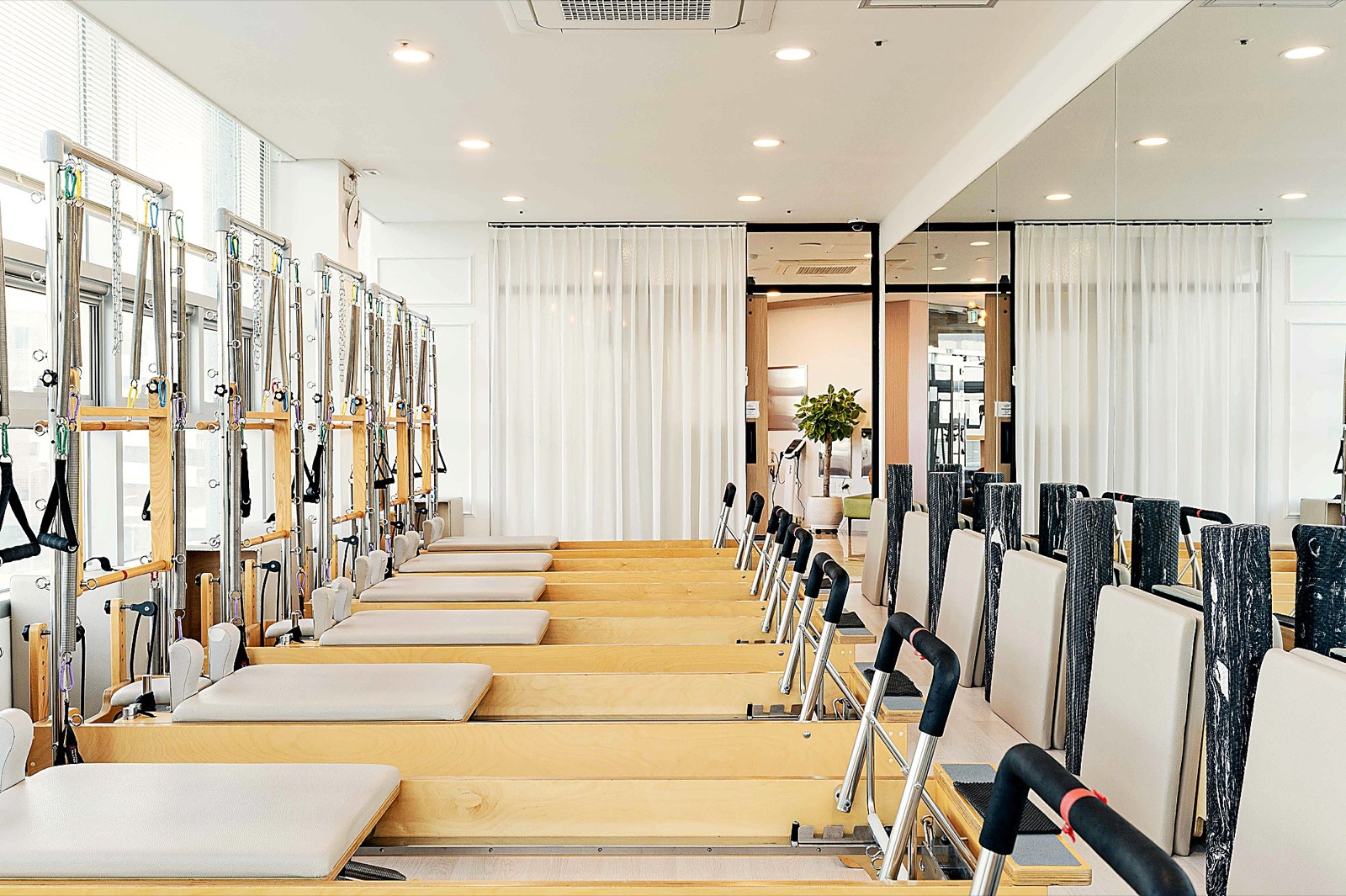
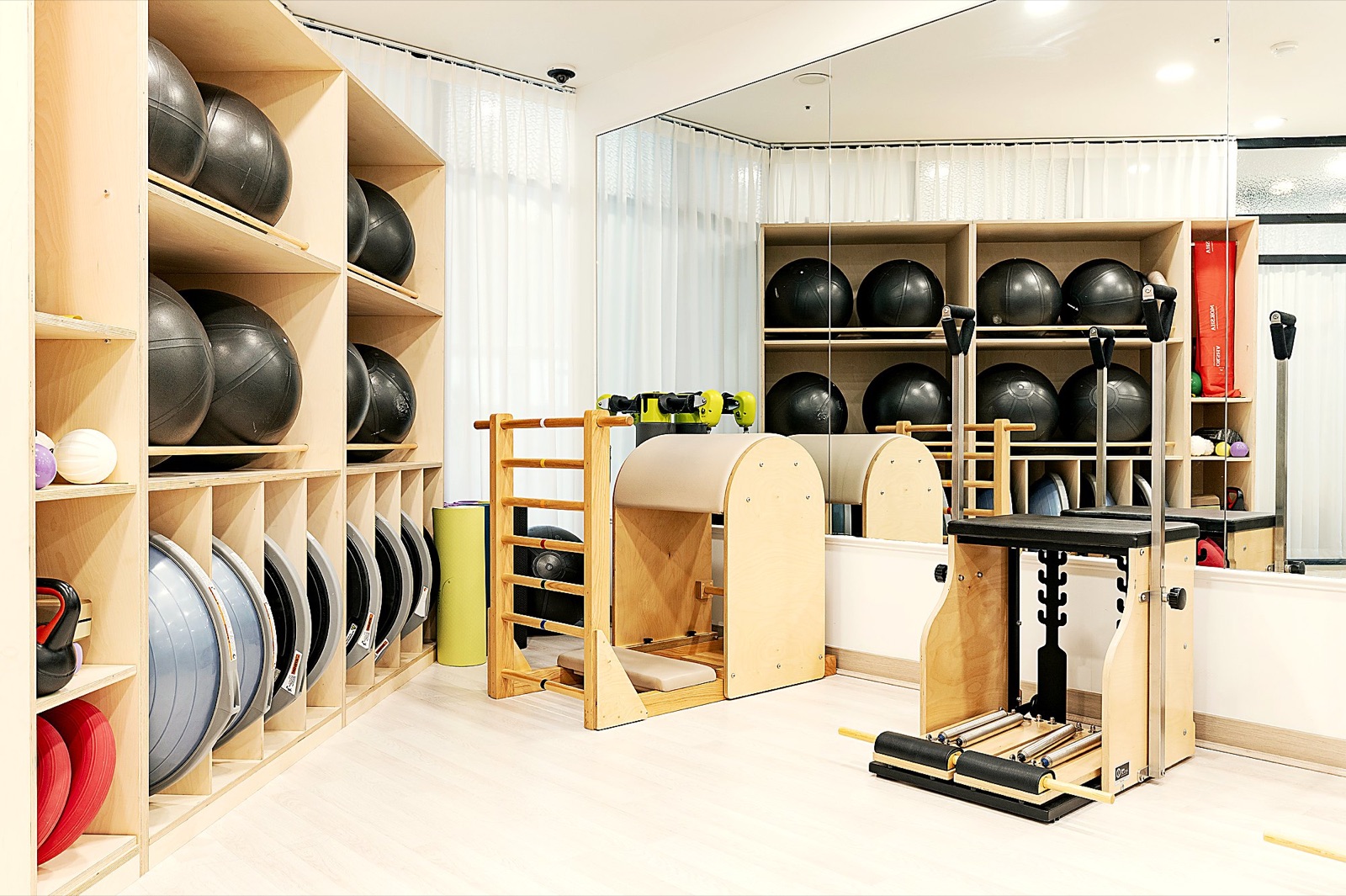
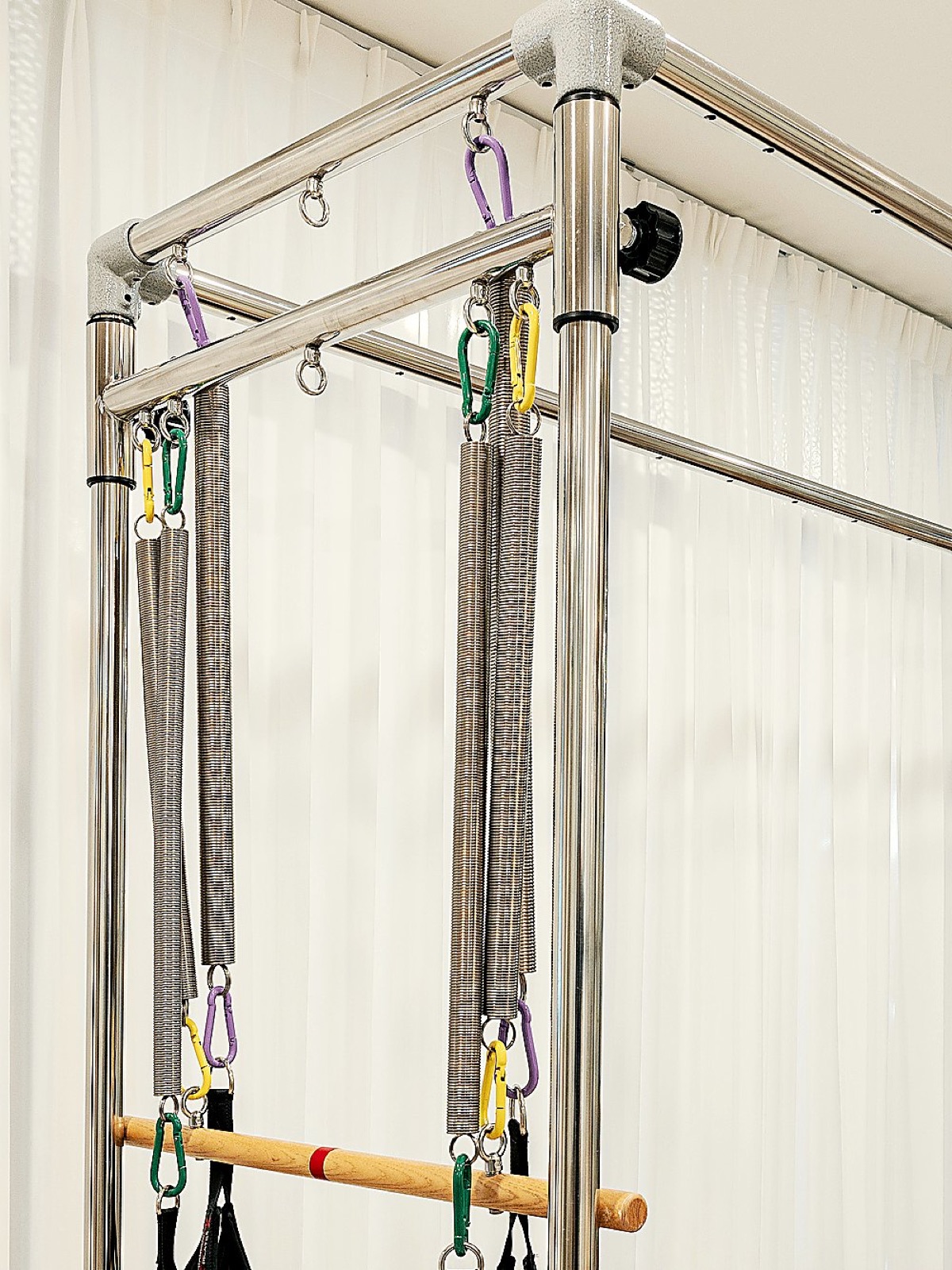
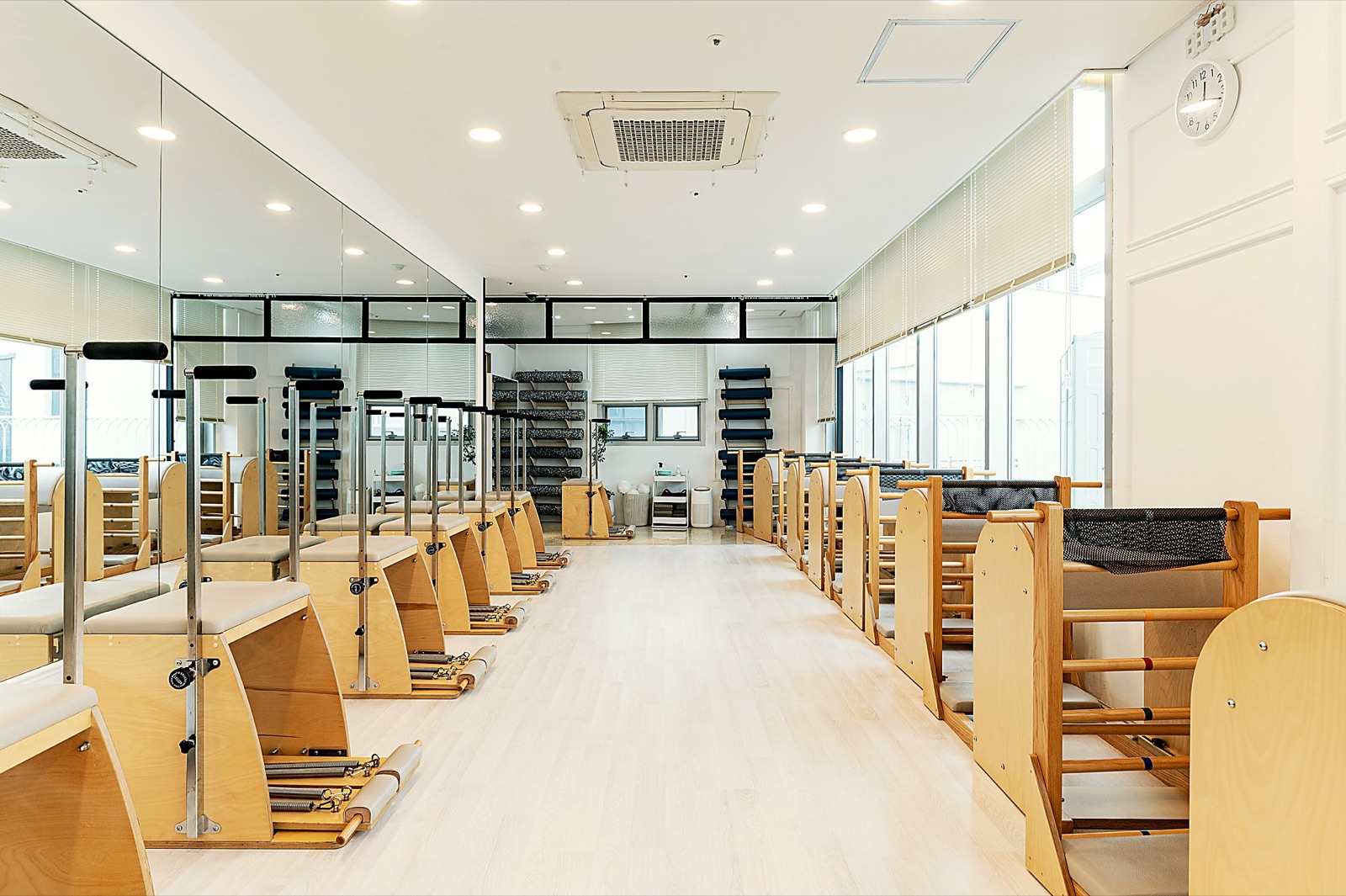
Shortcuts are easiest to spot from the outside. At Balance On Pilates Hanam, private sessions take place in three private rooms separate from the group studio, on Balanced Body equipment from the US. The moment your lower back lifts, we adjust the springs and your range of motion right then. At your first consultation, our director, who majored in Pilates, looks at your posture and movement in person and starts by finding out which muscles are helping out in which exercises.